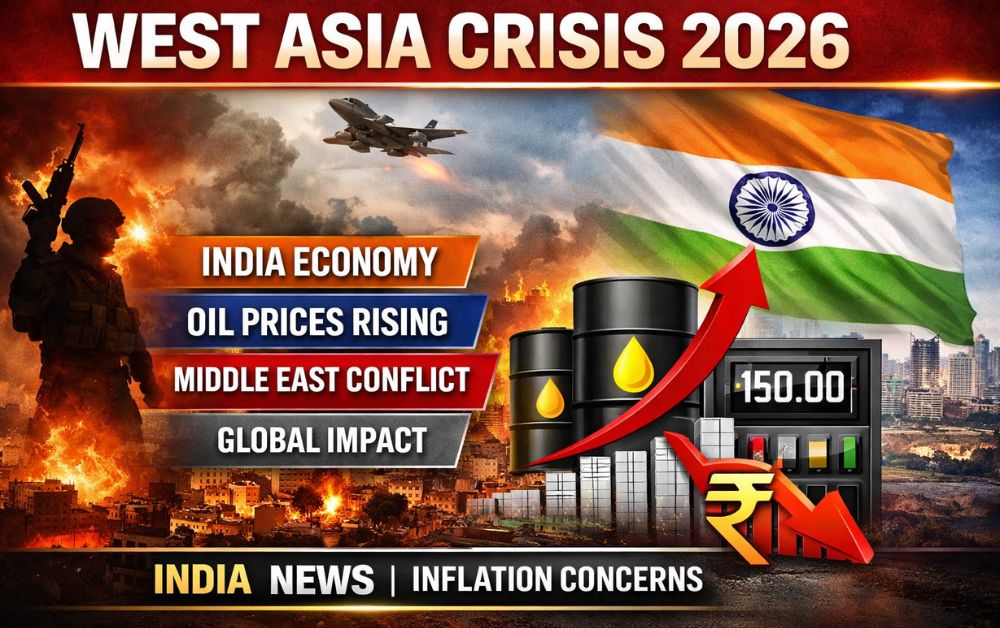
The West Asia Crisis 2026 Explained has quickly become one of the most serious global developments of the year. What started as a regional conflict has now turned into a major geopolitical and economic issue, with direct impact on India.
In this article, we explain what is happening in West Asia, why it matters for India, and what could happen next.
What Is the West Asia Crisis 2026 Explained ?
The current crisis began in late February 2026 after military strikes involving the United States, Israel, and Iran. The situation escalated rapidly with retaliatory attacks and damage to key energy infrastructure in the region.
The conflict has also affected major global shipping routes, especially the Strait of Hormuz, which is one of the world’s most important oil transit points.
As tensions continue, the crisis is no longer limited to one region—it is now affecting global trade, energy supply, and financial markets.
Key Developments So Far
The situation is evolving quickly, but some major developments include:
- Disruption in oil and gas supply routes
- Increased global crude oil prices
- Rising freight and shipping costs
- Damage to energy infrastructure
- Growing uncertainty in global markets
India has also started closely monitoring the situation. The government has held high-level meetings and called for preparedness and coordinated action.
Why the West Asia Crisis 2026 Explained Matters for India
Heavy Dependence on West Asia
India depends heavily on West Asia for energy. Around 88% of crude oil and a large share of natural gas imports come from this region.
Any disruption in supply immediately affects India’s economy.
Impact on Indian Workers Abroad
Millions of Indians live and work in Gulf countries. The crisis raises concerns about their safety and job stability, which can also affect remittances sent back to India.
Economic Impact on India
1. Rising Fuel and Energy Costs
The West Asia Crisis 2026 Explained has already pushed crude oil prices higher. India’s oil basket reportedly crossed $150 per barrel, increasing fuel-related costs across sectors.
This leads to higher prices for transport, electricity, and daily goods.
2. Pressure on Industries
Several industries are feeling the impact:
- Auto sector facing possible production disruptions
- FMCG companies dealing with higher packaging costs
- Aviation sector hit by rising fuel prices and route disruptions
- Pharma sector facing increased raw material costs
In some cases, input costs have increased by 20% to 50% or more.
3. Supply Chain Disruptions
Shipping delays and rerouted trade routes have increased logistics costs. This is affecting exports and imports, making goods more expensive and slower to deliver.
4. Falling Rupee and Inflation Risk
The Indian rupee has weakened due to global uncertainty, touching record lows against the US dollar.
At the same time, inflation is expected to rise, which may impact household budgets.
5. Early Signs of Economic Slowdown
India’s economic growth has started showing signs of slowing down due to higher costs and supply issues.
Experts warn that GDP growth could drop and inflation could increase if the crisis continues.
Government Response and Measures
The Indian government has taken several steps:
- Monitoring the situation round-the-clock
- Considering relief measures for exporters
- Planning freight subsidies to support trade
- Ensuring fuel supply stability
A special relief scheme worth ₹497 crore has already been announced to help exporters affected by the crisis.
Read More : PMAY-G 2026 Update
Officials have also assured that India has enough fuel stocks and alternative supply routes.
Global Impact Beyond India
The crisis is not just an India issue. It is affecting:
- Global oil prices
- International trade routes
- Currency markets
- Supply chains across countries
Experts say this could become a long-term geopolitical challenge and even impact the global economic order.
What Happens Next?
The future depends on how the conflict evolves:
- If tensions reduce, markets may stabilise quickly
- If the conflict continues, prices and disruptions could worsen
- Long-term changes in global energy and trade routes are possible
India may also look to diversify energy sources and strengthen strategic reserves to reduce future risks.
Why This Crisis Is Important for Common Indians
Even if the conflict is far away, its effects are felt in daily life:
- Higher fuel prices
- Costlier groceries and goods
- Expensive travel
- Job and business uncertainty
This makes the West Asia crisis one of the most important global events for India in 2026.
FAQs(West Asia Crisis 2026 Explained)
1. What caused the West Asia crisis in 2026?
The crisis began after military strikes involving the US, Israel, and Iran, leading to escalating conflict in the region.
2. Why is West Asia important for India?
India depends on the region for oil, gas, trade routes, and also has millions of citizens working there.
3. Will fuel prices increase in India?
Yes, rising global oil prices are likely to increase fuel and transport costs.
4. Is India facing an economic crisis due to this?
Not yet, but there are early signs of slowdown and rising inflation risks.
5. What is the government doing about it?
The government is monitoring the situation, supporting exporters, and ensuring fuel supply stability.