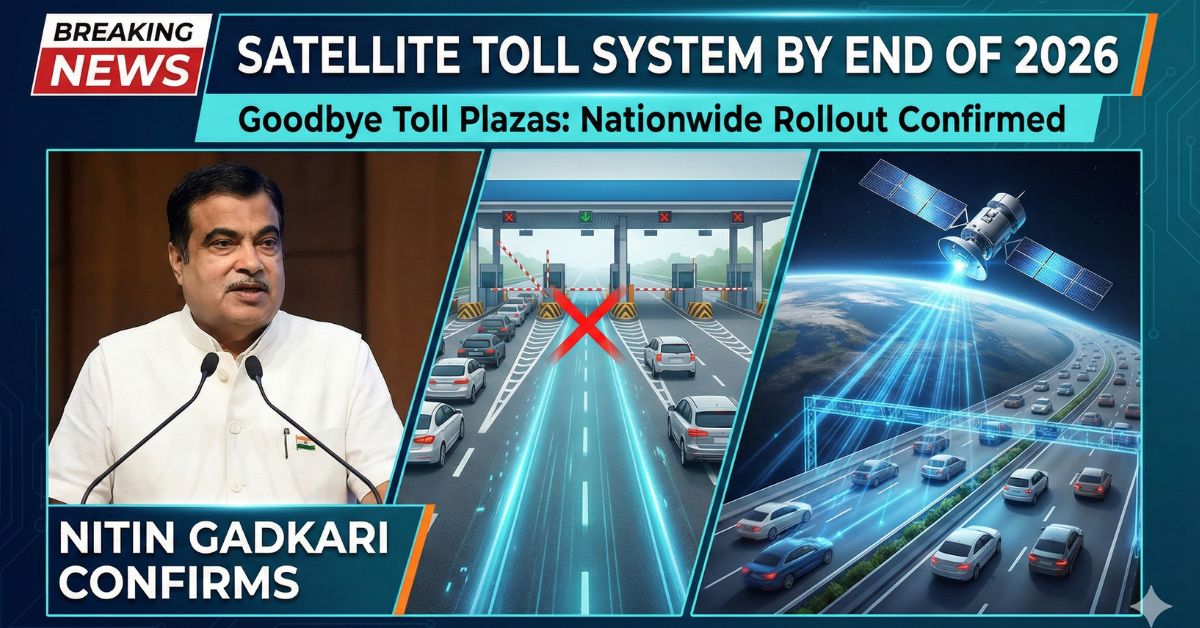
Union Minister for Road Transport and Highways, Nitin Gadkari, has kicked off 2026 with major announcements that will change how Indians drive. From ending waiting times at toll plazas to launching a nationwide safety mission with Bollywood stars, the Ministry is in full swing.
If you drive a car or own a commercial vehicle, here is everything you need to know about the new satellite toll system, the “Sadak Suraksha Abhiyan,” and the latest updates on National Highway safety.
Satellite-Based Toll Collection: The End of Toll Plazas?
The biggest news for Indian drivers is the confirmation of the GPS-based toll collection system. Nitin Gadkari has officially stated that this advanced system will be fully operational across India by the end of 2026.
How It Works
Currently, we use FASTag, which requires vehicles to slow down at toll barriers. The new system is different:
- No Barriers: There will be no physical toll booths.
- GPS Tracking: Your vehicle’s location will be tracked using satellite technology (GNSS).
- Automatic Deduction: Money will be deducted from your bank account based on the exact distance you travel on the highway.
Why It Matters
This move aims to reduce traffic jams to zero. Gadkari stated that the goal is to have “zero waiting time” at toll plazas. This will also save crores of rupees in fuel that is currently wasted while vehicles wait in lines. For the common man, it means a faster, smoother journey where you only pay for the road you use.
Read more: Economic Survey 2026
Sadak Suraksha Abhiyan 2026: A Movement for Safety
On January 25, 2026, the Ministry launched the Sadak Suraksha Abhiyan (Road Safety Campaign). Road accidents are still a major worry in India, and the government is taking a fresh approach to fix this.
Nitin Gadkari was joined by Bollywood superstars like Amitabh Bachchan, Alia Bhatt, and Vicky Kaushal to spread the message.
Key Highlights of the Campaign:
- Theme: ‘Kartavya’ (Duty). The focus is on making safety a personal duty, not just a rule.
- Golden Hour: A major focus is on helping accident victims within the first hour (Golden Hour) to save lives.
- Strict Action: The government is cracking down on overspeeding, rash driving, and not wearing seatbelts (even in the rear seats).
Highway Safety Debates: What Happened in Parliament?
On January 30, 2026, the issue of highway safety reached the Lok Sabha. Some members raised concerns that design flaws in National Highways (specifically in Tamil Nadu) were causing accidents.
Nitin Gadkari firmly denied these claims. He explained that:
- Safety Audits: All highways undergo strict safety audits by third-party experts before they are opened.
- Black Spots: The government uses an electronic portal (eDAR) to identify “black spots” (accident-prone areas) and fixes them immediately.
- Regular Checks: Roads are assessed regularly to add service roads, signboards, and crash barriers where needed.
What Happens Next?
The year 2026 is going to be a year of transition for Indian roads.
- For Drivers: Be ready to switch from FASTag to the new GPS system by late 2026.
- For New Cars: Most new vehicles will come with built-in GPS tracking for tolls.
- For Old Vehicles: The government will announce a method to install GPS devices in older cars.
The focus is clear: faster roads, safer drives, and smarter technology.
Frequently Asked Questions (FAQs)
Q1: Will FASTag stop working in 2026?
FASTag will not stop immediately, but the government plans to replace it with the GPS satellite system by the end of 2026. Both systems might run together for a short time during the transition.
Q2: How will the GPS toll system charge me?
The system will calculate the exact distance you drive on a National Highway using satellites. You will be charged only for that distance, directly from your linked bank account.
Q3: Is the new toll system mandatory for everyone?
Yes, the government aims to implement this across the country. New cars will have it built-in, and a solution for older cars will be provided.
Q4: What is the ‘Sadak Suraksha Abhiyan’?
It is a nationwide campaign led by Nitin Gadkari to reduce road accidents. It involves public awareness, stricter rules, and help from celebrities to promote safe driving habits.
Q5: Are Indian highways safe to drive on?
Nitin Gadkari has assured that all National Highways go through strict safety audits. However, the government is constantly identifying and fixing “black spots” where accidents happen frequently.