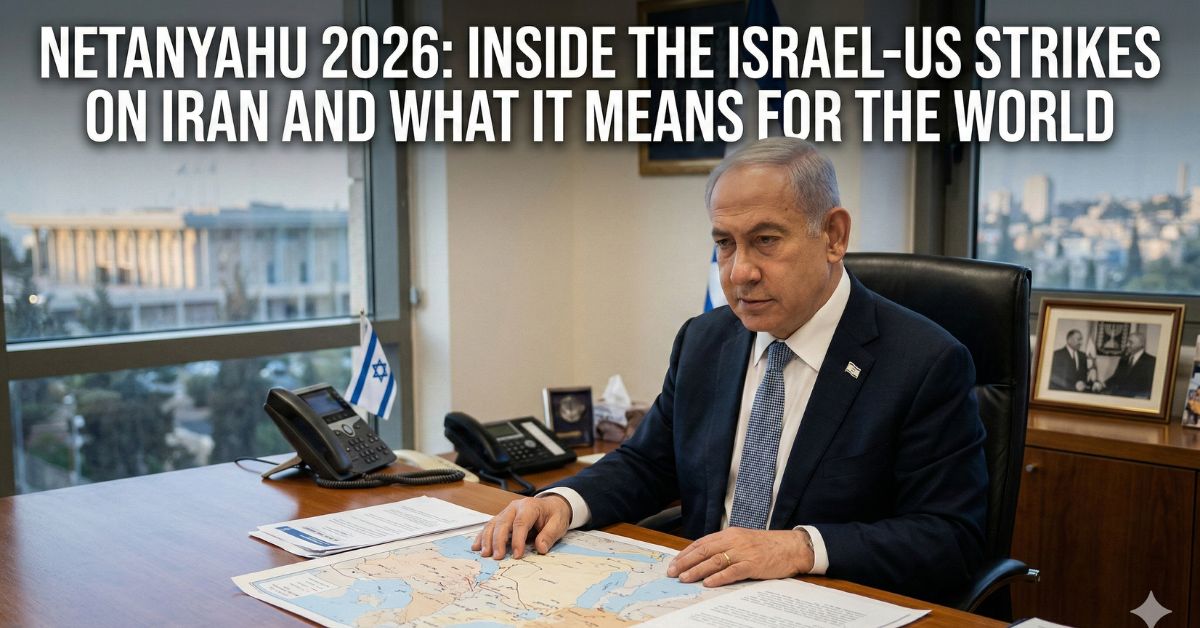
In early March 2026, the name Benjamin Netanyahu has dominated global headlines as Israel, with support from the United States, launched a major military operation against Iran. This event has quickly escalated into one of the most serious conflicts in the Middle East in years, drawing reactions from world powers and raising concerns about wider regional instability. In this article, we explain what has happened, why it matters, and what might come next.
What Just Happened?
On 28 February 2026, Israel and the United States carried out coordinated airstrikes against Iranian targets in an operation that Israeli leaders named “Operation Lion’s Roar”. The strikes hit multiple sites in Iran including military facilities, missile infrastructure, and areas suspected of involvement in nuclear research. Netanyahu and U.S. officials described the action as necessary to prevent Iran from obtaining nuclear weapons and to eliminate what they call an existential threat from Tehran’s leadership.
In response, Iran’s Islamic Revolutionary Guard Corps (IRGC) claimed to have launched missiles toward Israeli targets, including the office of Prime Minister Netanyahu and other strategic sites, in what it described as retaliation. Iran also warned of continued attacks.
Netanyahu’s Statement and International Support
Prime Minister Benjamin Netanyahu publicly thanked U.S. President Donald Trump for the military cooperation, calling the operation a protective step not only for Israel but for “the world.” He stressed that allowing Iran to secure nuclear weapons would endanger global security.
Netanyahu also praised support from other global leaders, notably Indian Prime Minister Narendra Modi, thanking him for standing with Israel during this crisis. This moment highlights the continuing diplomatic linkages Israel is building with countries outside the traditional Western bloc.
Background: Long-Term Tensions
Hostilities between Israel and Iran go back decades, rooted in disagreements over Iran’s nuclear program, its support for proxy groups across the Middle East, and mutual distrust. Previous talks to limit Iran’s missile and nuclear capabilities failed to produce lasting peace. The 2026 strikes marked a dramatic escalation, with both nations now openly engaging in direct military action.
Why It Matters
This conflict is significant for several reasons:
- Regional Stability: The Middle East is one of the world’s most volatile regions. A large-scale war could draw in neighboring countries and destabilize the Gulf.
- Global Economy: Any prolonged conflict risks disruptions in key shipping lanes such as the Strait of Hormuz, which handles a large portion of global oil supply.
- Diplomacy and Alliances: The U.S. involvement shows how deeply connected American and Israeli defence strategies have become. Israel’s reaffirmed ties with countries like India also illustrate shifting alliances.
Impact on India
India has taken a careful diplomatic line, expressing concern over civilian safety and calling for de-escalation, while maintaining strong ties with both the U.S. and Israel. The conflict could impact India in multiple ways:
Read More : Latest Kerala High Court News
- Oil Prices: India imports a significant amount of crude from the Middle East. Rising tensions can push global oil prices higher, affecting fuel costs at home.
- Trade & Diaspora: Indian businesses and citizens in the region may be affected if the conflict expands.
- Diplomatic Balance: India’s role as a strategic partner to different world powers positions it uniquely, but also requires careful navigation to avoid alignment that could isolate India in future negotiations.
What Happens Next?
The situation remains fluid. Iran has not shown signs of retreating, and Israel warns that the operation could continue. International actors like the UN and NATO members have called for restraint, while some countries are signaling support for coordinated action. Given the possibility of further retaliation and broader regional involvement, global attention remains fixed on developments in the Middle East.
FAQs
Why did Israel and the U.S. attack Iran?
Israel and the U.S. say they acted to prevent Iran from developing nuclear weapons and to dismantle key military structures they see as threats.
Is Benjamin Netanyahu safe?
Despite Iranian claims of targeting his office, there is no confirmed report that Netanyahu was harmed. He continues to lead and coordinate Israel’s response.
Could this war spread to other countries?
Yes. If Iran’s allies in the region join the conflict, it could escalate into a wider Middle East war.
How might this affect oil prices?
Conflicts in the Middle East often lead to higher oil prices globally, which could impact fuel and transport costs in India.
What is India’s stance?
India has underscored the need for peace and the protection of civilians while noting its diplomatic ties with both Israel and other global partners.