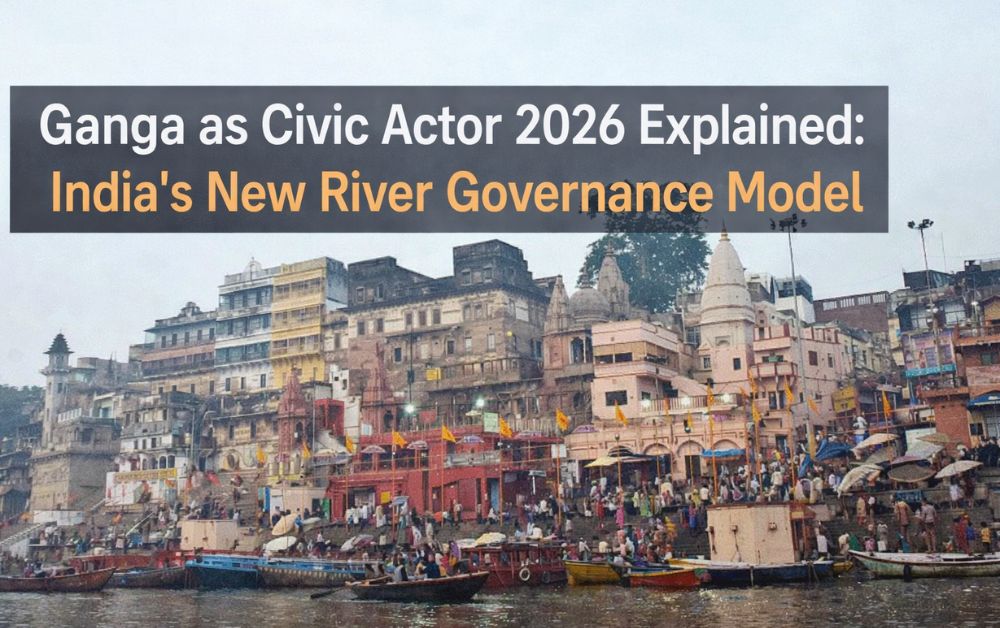
India’s most sacred river, the Ganga as Civic Actor 2026, is once again at the centre of a major policy discussion in 2026. A new idea—treating the Ganga as a “civic actor”—is gaining attention among policymakers, researchers, and urban planners. This concept goes beyond traditional river cleaning projects and focuses on how the river actively shapes governance, public life, and city planning, especially in places like Varanasi.
This article explains what “Ganga as Civic Actor 2026” means, why it matters for India, and how it could change the future of river governance.
What Does “Ganga as Civic Actor 2026” Mean?
The term “Ganga as Civic Actor 2026” means treating the Ganga not just as a natural resource, but as an active participant in civic life. Instead of seeing the river only as something to clean or manage, experts suggest it should be seen as shaping:
- Public behavior
- Urban planning decisions
- Cultural and social practices
According to recent policy discussions, especially focused on Varanasi, the Ganga plays a central role in daily life, rituals, economy, and governance systems.
This approach shifts thinking from technical solutions (like sewage treatment plants) to a broader social and governance model.
What Happened in 2026?
In March 2026, a policy article and discussions highlighted the need to rethink how Indian cities manage rivers like the Ganga. The focus was on Varanasi, one of the oldest cities on the river, where the Ganga is deeply linked to religion, tourism, and local livelihoods.
The key message was clear:
India needs to move beyond “top-down” river cleaning programs and involve communities, local traditions, and civic systems in governance.
Why This Shift in Thinking Is Important
For many years, efforts like the Namami Gange Programme focused mainly on pollution control and infrastructure. While these steps helped, challenges still remain, such as:
- Waste disposal into the river
- Urban pressure from population growth
- Lack of community participation
The new idea suggests that without involving people and local systems, long-term change is difficult.
Ganga and Urban Governance: A New Approach
Moving Beyond Technical Solutions
Traditional approaches rely heavily on engineering solutions like:
- Sewage treatment plants
- Drainage systems
- Riverfront development
But experts say these alone are not enough. The river must be integrated into how cities function.
Role of Citizens and Communities
The Ganga influences daily activities such as:
- Religious rituals
- Tourism and small businesses
- Cultural events
Recognizing this, governance should include:
- Local participation
- Behavioral change campaigns
- Community-led monitoring
Impact on Cities Like Varanasi
Varanasi is often seen as the best example of how the Ganga shapes civic life. The river is not just a water body—it is central to:
- Spiritual identity
- Economy through tourism
- Urban design (ghats, roads, markets)
Experts argue that policies should reflect this reality. Instead of forcing rigid rules, governance should adapt to local practices.
Why It Matters for India
Environmental Impact
Treating the Ganga as a civic actor can improve:
- Long-term river cleanliness
- Sustainable water use
- Ecosystem protection
Economic Benefits
Better river governance can boost:
- Tourism
- Local jobs
- River-based economies
Social and Cultural Importance
The Ganga as Civic Actor 2026 is deeply linked to Indian identity. Policies that respect cultural practices are more likely to succeed.
Challenges in Implementing This Idea
While the concept is promising, it also faces challenges:
- Coordination between multiple government agencies
- Balancing tradition with modern regulations
- Ensuring accountability at the local level
There is also a risk that the idea remains theoretical unless supported by clear policies and action.
What Happens Next?
Experts suggest the following steps for India:
- Stronger local governance systems around river cities
- Community participation in decision-making
- Better integration of culture, environment, and policy
Future discussions, including global forums and policy platforms, may further shape how India adopts this approach.
Conclusion
The idea of “Ganga as Civic Actor 2026” marks an important shift in how India views its most important river. Instead of treating it as just a resource to manage, this approach sees the Ganga as a living part of civic life.
Read More : Hyderabad Live News 2026
If implemented well, it could lead to more sustainable, inclusive, and effective river governance across India.
FAQs(Ganga as Civic Actor 2026)
1. What is meant by “Ganga as Civic Actor”?
It means treating the Ganga as an active part of public life and governance, not just a river to be cleaned.
2. Why is this concept important in 2026?
It reflects a shift from technical solutions to community-based and governance-focused approaches.
3. Which city is mainly discussed in this context?
Varanasi is a key example because of its strong connection with the Ganga.
4. How is this different from earlier river cleaning programs?
Earlier programs focused mainly on infrastructure, while this approach includes social and cultural factors.
5. Will this improve the Ganga’s condition?
It can help in the long term if combined with strong policies and community participation.