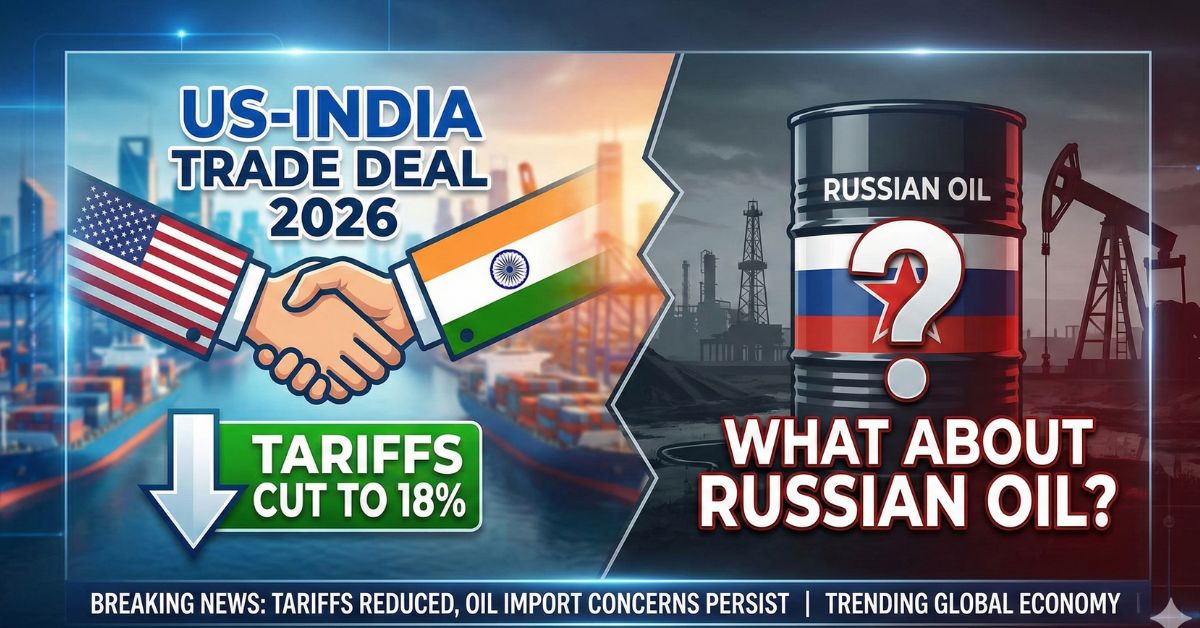
Introduction In a massive development for the Indian economy, Prime Minister Narendra Modi and US President Donald Trump have announced a historic trade deal this week (February 2026). After months of high tension and heavy taxes on Indian goods, the United States has agreed to slash tariffs significantly. However, this relief comes with big conditions, including a major shift in India’s oil buying strategy.
Here is a simple, detailed breakdown of what happened, what India gained, and the price we might have to pay.
The Big Announcement: Tariffs Slashed to 18%
For the past year, Indian exporters were facing a tough time. The US had imposed a steep 50% tax (tariff) on many Indian products. This included a “reciprocal tax” and a penalty because India continued to buy oil from Russia during the Ukraine war.
Under the new deal announced by President Trump:
- The total tariff on Indian goods entering the US has been cut down to 18%.
- The extra penalty for buying Russian oil has been removed.
- This makes Indian products cheaper and more competitive in the American market compared to rivals like China (34% tariff) and Vietnam (20% tariff).
Commerce Minister Piyush Goyal confirmed that this deal would boost Indian exports, especially for industries that employ millions of people.
Read more: Bill Clinton News
The Price India Pays: Russian Oil & The $500 Billion Promise
While the tax cut is good news, the US expects a lot in return. President Trump took to social media to list the heavy conditions India seemingly agreed to:
1. Stopping Russian Oil Imports
Trump claimed that PM Modi has agreed to stop buying oil from Russia. For years, India saved billions by buying discounted Russian crude. Now, India is expected to buy more oil and energy from the United States and potentially Venezuela.
- Note: While Trump stated this clearly, Indian officials have not yet officially used the word “stop,” but they have confirmed a shift in energy buying.
2. The $500 Billion Commitment
The US President also stated that India has committed to purchasing $500 billion worth of American goods. This includes:
- Energy (Oil, Coal, LNG)
- Technology
- Defense equipment
- Agricultural products
3. “Zero Tariff” Access for US Goods?
Trump claimed India would lower its trade barriers to “Zero” for US products. This has caused some worry about whether cheap American goods will flood the Indian market. However, the Indian government has clarified that sensitive sectors are safe.
Winners & Losers: Who Benefits?
This deal will affect different sectors in different ways.
The Winners (Sectors likely to grow):
- Textiles & Garments: With lower US taxes, Indian clothes become cheaper than those from Bangladesh or Vietnam in American shops.
- Gems & Jewellery: A major export sector that was struggling will see relief.
- Solar Energy: Indian solar manufacturers (like those making panels) will find it easier to sell to the US.
- IT & Pharma: These sectors remain strong and will benefit from better diplomatic ties.
The Protected Sectors:
- Agriculture & Dairy: There was a fear that American milk and crops would hurt Indian farmers. Minister Piyush Goyal assured Parliament that “the interests of our farmers and dairy sector have been fully protected” and they will not face unfair competition.
Why This Matters to You
You might be wondering how a high-level diplomatic deal affects a common citizen. Here is the impact:
- More Jobs: Sectors like textiles and leather are “labor-intensive.” If exports grow, factories in places like Tiruppur, Surat, and Ludhiana may hire more workers.
- Stock Market Boom: The Indian stock market (Sensex and Nifty) jumped up because investors believe this deal will help Indian companies earn more profit.
- Petrol Prices: This is the tricky part. If India stops buying cheap Russian oil and buys expensive US oil, petrol and diesel prices in India could go up unless the government manages the cost.
What Happens Next?
Currently, we have the announcements, but the final legal document is still being drafted. A Joint Statement releasing the fine print is expected in a few days.
- Official Confirmation: We need to see if India officially bans Russian oil or just reduces it slowly.
- Opposition Reaction: Leaders like Rahul Gandhi have demanded full transparency, asking if the government gave away too much to the US.
For now, the trade war is over, and business is back on track.
Frequently Asked Questions (FAQs)
Q1: Will US goods become cheaper in India now?
Possibly. If India lowers its own import duties as promised, branded US products (like electronics or certain foods) could become cheaper. However, the government has promised to protect Indian farmers from cheap imports.
Q2: Why did the US impose a 50% tax on India earlier?
The US was unhappy that India kept buying oil from Russia (which funds Russia’s war) and that India had high taxes on American goods. They called it a “reciprocal tax.”
Q3: Is the deal final?
The main terms are agreed upon, but the final paperwork is being finished. Both countries have announced the success, so it is effective immediately.
Q4: Will this hurt Indian farmers?
The government says no. The Commerce Minister has stated that agriculture and dairy sectors are kept out of the dangerous parts of the deal to protect local livelihoods.
Q5: How does this help India against China?
US tariffs on Chinese goods remain very high (around 34% or more). With India’s tariff dropping to 18%, Indian goods have a price advantage over Chinese goods in the American market.