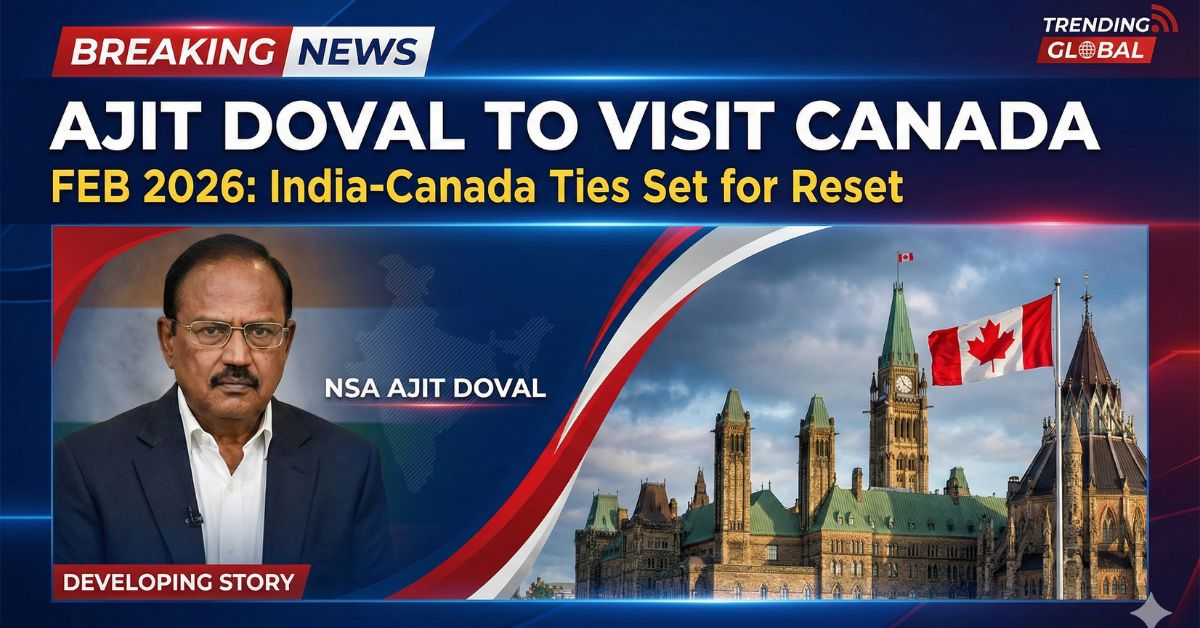
In a significant development for India’s foreign policy, National Security Advisor (NSA) Ajit Doval is reportedly scheduled to visit Canada in February 2026. This visit marks a crucial turning point in India-Canada relations, which have been strained for over two years following diplomatic standoffs.
Doval’s trip to Ottawa is being seen as a “thaw-breaker,” signaling that both nations are ready to move past recent bitterness and focus on strategic security cooperation. If confirmed, this will be one of the highest-profile visits by an Indian official to Canada since the diplomatic freeze began in 2023.
The Mission: Why is Ajit Doval Going to Canada?
According to high-level sources, the primary agenda of NSA Doval’s visit is to “rebuild trust” and establish a concrete framework for security cooperation. The visit comes less than six months after his Canadian counterpart, National Security and Intelligence Advisor Nathalie G. Drouin, visited New Delhi in September 2025.
Key Agenda Points:
- Tackling Extremism: India’s top concern remains the operation of pro-Khalistan separatists on Canadian soil. Doval is expected to press for stricter action against those using Canadian territory to incite violence in Punjab.
- Gang Warfare & Organized Crime: Both nations are worried about the nexus between organized crime gangs (such as the Lawrence Bishnoi gang) and local violence. A “security and law enforcement dialogue” is already active between the NIA (National Investigation Agency) and Canada’s RCMP (Royal Canadian Mounted Police).
- Citizen Safety: Ensuring the safety of Indian students and professionals in Canada, and vice versa, will be a priority.
Context: The ‘Mark Carney’ Factor
The diplomatic landscape has shifted significantly. Reports suggest that this visit is also groundwork for a potential maiden bilateral trip by Canadian Prime Minister Mark Carney to India later this year.
Under the new Canadian leadership, there appears to be a renewed effort to “reset” the relationship with New Delhi. The focus has moved from public accusations to back-channel diplomacy, with Doval playing a central role in navigating the complex security dynamics.
Background: A Rocky Road Since 2023
Relations between New Delhi and Ottawa hit rock bottom in September 2023, following allegations by then-PM Justin Trudeau regarding the killing of Hardeep Singh Nijjar. India had dismissed the allegations as “absurd” and “motivated,” leading to tit-for-tat diplomat expulsions and visa suspensions.
However, since late 2025, both sides have resumed dialogue. The focus has shifted to “One India” respect from Canada and “Safer Streets” in Canada, as articulated by Canadian officials during previous meetings.
What Does This Mean for India?
For India, sending its “Spymaster” and top security official to Ottawa sends a clear message: India is willing to engage, but Security comes first.
By handling this at the NSA level rather than just the Foreign Ministry level, India is emphasizing that the core issue is national security (terrorism and separatism), not just diplomatic pleasantries. If Doval succeeds in getting concrete assurances on the Khalistan issue, it could normalize trade and visa operations fully.
Frequently Asked Questions (FAQs)
Q1. When is NSA Ajit Doval visiting Canada?
Ajit Doval is expected to travel to Ottawa, Canada, in early February 2026.
Q2. Why is Ajit Doval visiting Canada now?
He is visiting to hold strategic security talks, discuss counter-terrorism measures, and rebuild diplomatic ties that were damaged in 2023.
Q3. Who is the current Prime Minister of Canada in 2026?
As per recent reports in this timeline, Mark Carney is the Prime Minister of Canada, having succeeded Justin Trudeau.
Q4. What is the main issue between India and Canada?
The main tension revolves around India’s concern regarding pro-Khalistan extremists operating from Canada and Canada’s allegations regarding the killing of Hardeep Singh Nijjar.
Q5. Is the India-Canada visa process normal now?
While visa services have largely resumed, full diplomatic normalcy is expected to return only after these high-level security dialogues are successful.