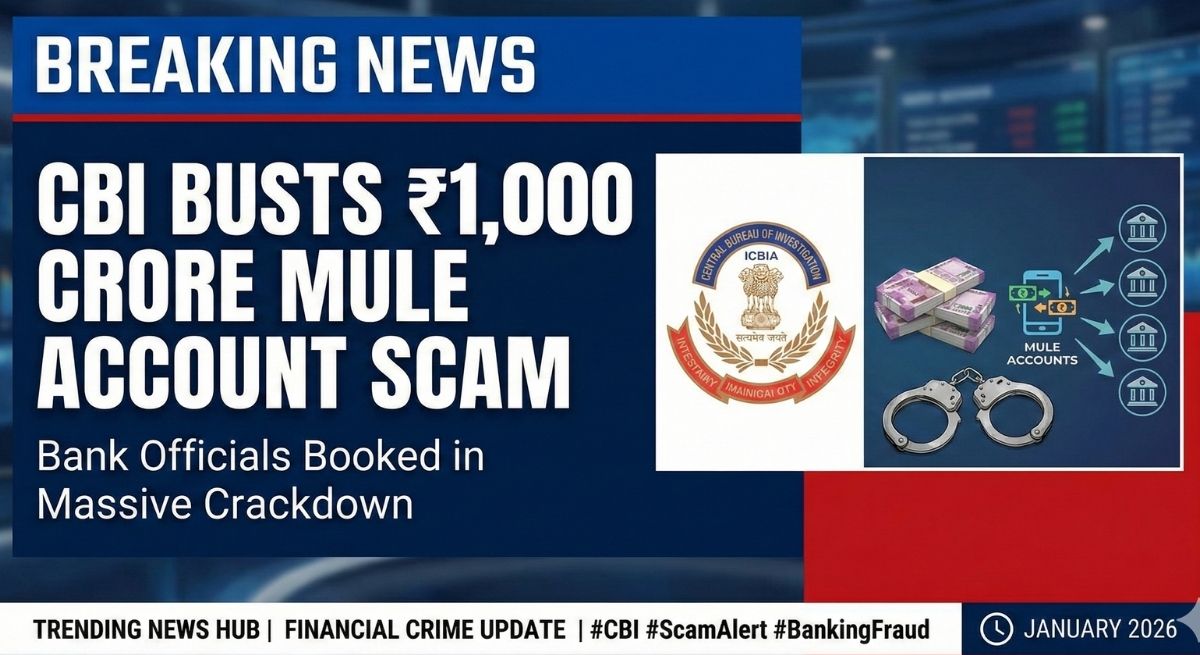
In a massive nationwide operation against cybercrime, the Central Bureau of Investigation (CBI) and state police forces have intensified their crackdown on “Mule Bank Accounts”. As of January 2026, investigative agencies have exposed a sophisticated network involving bank officials, middlemen, and cybercriminals who used these accounts to launder illicit money.
The latest investigation has revealed that over ₹1,000 crore was routed through these fake or rented accounts, often used for online gambling, investment frauds, and the infamous “Digital Arrest” scams.
Here is a detailed report on what a mule account is, how the scam works, and why this crackdown matters for every bank account holder in India.
What is the News?
On January 16, 2026, the CBI registered a fresh FIR against a branch head of a public sector bank and 18 others in Rajasthan. They are accused of opening hundreds of mule accounts using forged documents.
- The Scale: These accounts were used to layer and hide proceeds from cybercrimes. Just one cluster of accounts handled transactions worth over ₹1,000 crore.
- The Modus Operandi: Fraudsters created non-existent companies (shell firms) and used fake rent agreements and KYC documents to open current accounts.
- Arrests: In a parallel operation in Bengaluru, the police arrested 12 individuals who were “renting” their bank accounts to handlers based in Dubai for illegal gambling operations.
What is a ‘Mule Account’?
A Money Mule Account is a bank account used to receive and transfer illegally obtained money. The person holding the account (the “mule”) lets criminals use their account to transfer funds, often in exchange for a small commission.
Criminals use these accounts to break the “money trail,” making it difficult for the police to trace the stolen money back to the masterminds.
How Common People Get Trapped
- “Rent Your Account” Offers: Scammers approach students, housewives, or daily wage workers, offering them ₹5,000 to ₹10,000 per month just to let them use their bank account details.
- Work-from-Home Scams: People are asked to accept payments in their personal accounts and transfer them to another UPI ID as part of a “job.”
- KYC Theft: In many cases, victims don’t even know an account exists in their name. Scammers steal Aadhaar and PAN details to open accounts secretly with the help of corrupt bank staff.
Why This Crackdown Matters
The rise of mule accounts is the primary reason why retrieving money lost in cyber frauds is so difficult. When a victim reports a fraud, the police track the money to a bank account, only to find it belongs to a daily wage labourer who has no idea about the crores of rupees flowing through it.
Official Action: The Reserve Bank of India (RBI) and the Ministry of Home Affairs (MHA) have directed banks to strictly monitor “dormant” accounts that suddenly see high-value transactions. The government has already frozen over 8.5 lakh such suspected accounts in recent months.
Safety Guidelines: How to Protect Yourself
With the authorities taking strict action, account holders must be vigilant. If your account is found to be used for laundering money (even if you were tricked), you can face legal action under the Prevention of Money Laundering Act (PMLA).
- Never “Rent” Your Account: Do not allow anyone to use your bank account for transactions in exchange for money.
- Guard Your KYC: Do not share photos of your Aadhaar or PAN card with unknown persons on WhatsApp or Telegram.
- Check Your CIBIL Report: Regularly check your credit report to see if any unknown loans or bank accounts have been opened in your name.
- Report Suspicious Activity: If you see an unexpected deposit in your account, report it to your bank immediately. Do not spend or transfer it.
What Happens Next?
The CBI is expected to expand this probe to other states, including Delhi, Haryana, and Gujarat. More arrests of bank officials and verification agents are likely in the coming weeks. The government is also planning to introduce stricter Video KYC norms to prevent the opening of accounts with fake documents.
Frequently Asked Questions (FAQs)
Q1: What is a mule bank account?
A mule account is a bank account used by criminals to transfer stolen money. The account holder (mule) acts as a middleman to hide the identity of the actual criminal.
Q2: Is it illegal to let someone else use my bank account?
Yes, it is illegal. If your account is used for fraud, you can be arrested for aiding a crime and money laundering, even if you did not know the money was stolen.
Q3: How much money was involved in the recent scam?
In the recent case investigated by the CBI in January 2026, over ₹1,000 crore was found to be routed through a network of mule accounts.
Q4: How can I check if a fake account exists in my name?
You can check your CIBIL or credit report. It lists all active bank accounts and loans linked to your PAN card.
Q5: What should I do if someone offers me money to use my account?
Refuse immediately and block the person. You should also report the number to the Cyber Crime portal (1930) or your local police.