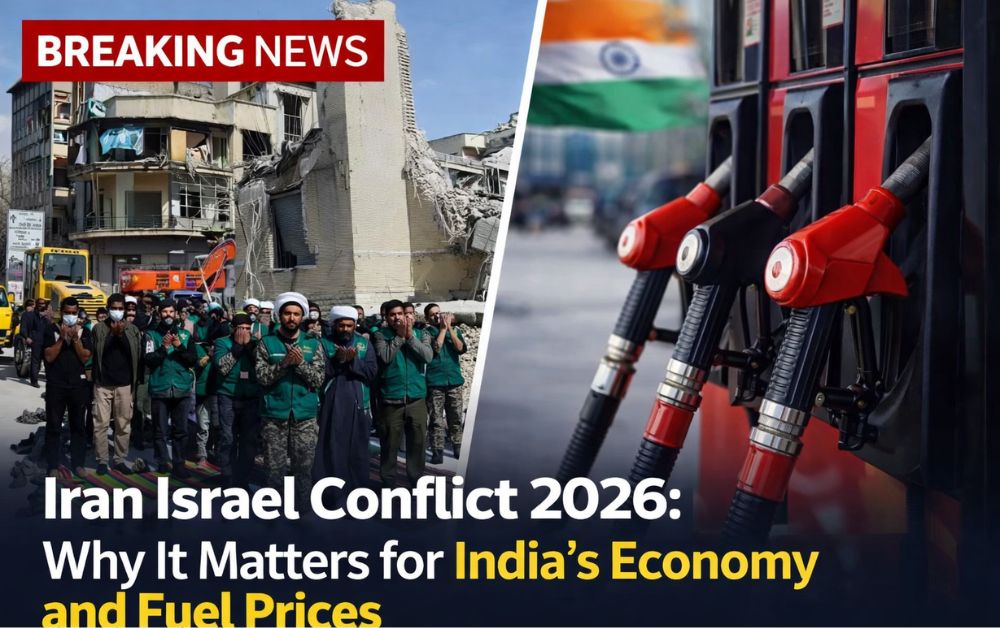
The Iran Israel Conflict 2026 has quickly become one of the biggest global crises in recent years. What started as targeted military strikes has now expanded into a wider conflict involving multiple countries, rising oil prices, and serious economic risks.
In this article, we explain what is happening, why it matters, and how it is already affecting India.
What Happened in the Iran Iran Israel Conflict 2026?
The conflict began in late February 2026 when the United States and Israel launched airstrikes on Iran. This triggered strong retaliation from Iran, leading to a wider regional war across the Middle East.
Since then, the situation has escalated rapidly:
- Missile and drone attacks have been reported across several countries.
- Fighting has spread to areas like Syria, Lebanon, and the Gulf region.
- Major powers and alliances are now indirectly involved.
Efforts for a ceasefire have failed so far, and the conflict continues to grow.
Key Developments So Far
The war has moved beyond a simple two-country conflict and is now affecting the entire region:
- Iran has reportedly launched missile attacks and targeted military bases.
- Israel has intercepted multiple strikes and carried out counterattacks.
- Oil supply routes, especially the Strait of Hormuz, are under threat.
- Global diplomatic efforts remain weak, with no clear peace agreement yet.
This has increased fears of a prolonged and wider war.
Why This War Matters Globally
This conflict is not just about Iran and Israel. It has global consequences because of its location and scale.
Energy Crisis Risk
The Middle East is the world’s biggest oil-producing region. Any disruption affects global fuel supply.
The Strait of Hormuz, a key shipping route for oil and gas, is under pressure. This has already pushed global oil prices higher.
Economic Impact
Higher fuel prices lead to:
- Rising inflation worldwide
- Increased transportation costs
- Pressure on global supply chains
Experts warn that millions of people could face food insecurity if the conflict continues.
Impact of Iran Israel War 2026 on India
India may not be directly involved in the war, but the effects are already visible.
1. Rising Fuel Prices
India imports over 85% of its crude oil. Any disruption in the Middle East increases fuel costs.
This leads to:
- Expensive petrol and diesel
- Higher LPG prices
- Increased transport and travel costs
Recent reports show LPG prices rising and airfares increasing due to higher fuel costs.
2. Inflation and Economic Pressure
India’s economy is starting to feel the strain:
- Growth may slow down
- Inflation may increase
- Rupee may weaken
The government has already warned of a “significant” impact on economic indicators.
3. Fertiliser and Food Supply Concerns
India depends heavily on imported fertilisers from the Gulf region.
Due to supply disruptions:
- Fertiliser prices are rising
- Availability is becoming uncertain
- Farmers fear reduced crop production
Some experts even warn of a possible food crisis if the war continues.
4. India’s Diplomatic Position
India has taken a neutral stance in the conflict.
The government has:
- Urged all sides to de-escalate
- Maintained relations with Iran, Israel, and the US
- Focused on protecting national interests
This balanced approach is important but also challenging in such a complex situation.
Why This Matters for Indian Citizens
Even though the war is far away, its effects are real for everyday people in India:
- Higher fuel and travel costs
- Increased prices of food and essentials
- Possible job and business impacts due to economic slowdown
This shows how global conflicts can directly affect daily life in India.
What Happens Next?
The future of the Iran Israel Conflict 2026 remains uncertain.
Read More : West Asia Crisis 2026 Explained
Possible scenarios include:
- Continued escalation across the Middle East
- International intervention for peace talks
- Long-term economic impact worldwide
Experts say the next few weeks are critical, especially if oil supply disruptions continue.
FAQs(Iran Israel Conflict 2026)
1. When did the Iran Israel war 2026 start?
The conflict began in late February 2026 after US and Israeli airstrikes on Iran.
2. Is India involved in the war?
No, India is not directly involved. It has taken a neutral diplomatic position.
3. Why are fuel prices rising in India?
Fuel prices are rising due to disruptions in global oil supply from the Middle East.
4. Can this war affect food prices in India?
Yes, due to fertiliser shortages and higher transport costs, food prices may increase.
5. Will the war end soon?
There is no clear timeline yet. Peace talks have not succeeded so far.